
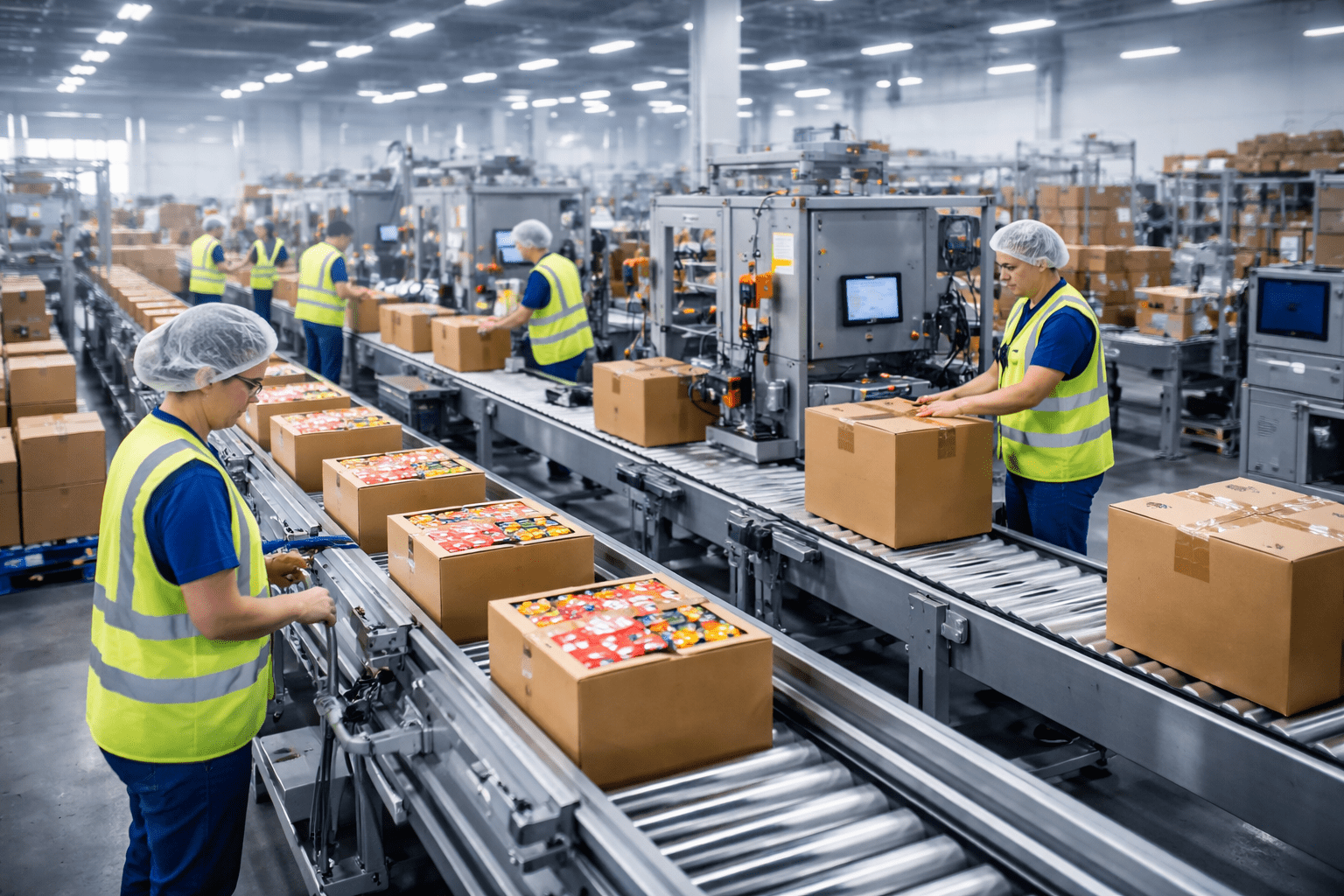
The Problem: Labor Shortages in Packaging Operations
Packaging operations are one of the most critical components of industrial production. Once products are manufactured, they must be packaged quickly, accurately, and consistently to meet demand. However, many companies are facing ongoing staffing challenges that directly impact packaging efficiency.
Packaging facilities rely heavily on a steady workforce to maintain speed and output. Unlike some areas of manufacturing, packaging often requires a high volume of workers performing repetitive tasks in a fast-paced environment. The challenge is that these roles are becoming harder to fill and even harder to retain. Labor shortages, high turnover, and inconsistent attendance are common issues across packaging operations. For many companies, this creates a constant struggle to keep lines running at full capacity.
The Impact on Production and Fulfillment
When packaging lines are understaffed, the effects are immediate. Production slows down, bottlenecks form, and orders begin to back up. This can lead to missed shipping deadlines, delayed deliveries, and dissatisfied customers. In industries where timing is critical—such as retail distribution and consumer goods—delays directly impact revenue.
Beyond missed deadlines, understaffed packaging operations also increase costs. Overtime expenses climb, quality control suffers, and the risk of errors increases. When workers are stretched thin, they rush through tasks, leading to packaging mistakes that damage brand reputation and customer trust. The ripple effects extend beyond the packaging department. When packaging becomes a bottleneck, it slows the entire supply chain, affecting distribution partners and end customers.
The Solution: Flexible Workforce Partnerships
Many packaging companies are turning to workforce solutions providers to address staffing challenges. Rather than struggling with traditional hiring timelines, they partner with providers who can deliver workers quickly and reliably.
Flexible workforce partnerships offer several advantages:
- Speed: Workers can be deployed within days, not weeks
- Scalability: Adjust staffing levels based on demand fluctuations
- Reliability: Access to pre-screened, job-ready workers
- Cost efficiency: Reduce overtime and training expenses
By working with a trusted workforce partner, packaging operations can maintain consistent output without the burden of permanent hiring and long-term employment commitments.
Real-World Application: Handling Seasonal Demand Spikes
Consider a packaging facility that experiences a 40% increase in orders during the holiday season. Traditional hiring would take 4-6 weeks to fill positions. By that time, the peak season could be over, and the company would have missed significant revenue. With a workforce partner, the facility can request additional workers within days. The operation maintains its production schedule, meets customer deadlines, and captures the seasonal revenue opportunity. When demand returns to normal, staffing levels adjust accordingly—no long-term commitments, no layoffs. This flexibility is what separates companies that thrive during demand spikes from those that struggle to keep up.
Conclusion
Packaging line staffing challenges are solvable with the right strategy. By implementing flexible workforce solutions, companies can maintain consistent production, meet deadlines, and protect their bottom line. CACH Labor supports packaging operations nationwide by providing reliable, scalable workforce solutions that keep production moving.